Music that Matters – Not All Who Wander Are Lost…

Come Now Fount of Every Blessing – Mumford & Sons

I love this hymn because I get this hymn. I, too, am prone to wander and prone to leave the God I love.

But as Tolkien wrote, “Not all who wander are lost.”

Glass Half Full (I promise)

I am not really a glass-half-empty kind of guy.

I know that with all the talk of Jude and Infant Salvation it can sometimes sounds as if I am.

I get that.

But I am not.

While I can, at times, be a bit woe is me, I really do love and enjoy my life.

I get to work from home. I get to home school my kids. I get to hang out with my family all day. We even get to eat most meals together.

Yes, our family life is very Leave It To Beaverish.

So yea, my life is a bit like my nomenclature, Saint Depraved, and a bit duplisatist.

I am most certainly a sinner.

But I am also most certainly a saint.

My life if most certainly full of pain and hurt.

But it is also most certainly full of peace and joy.

And this summer is no different.

This summer has been full of fun, but as I write this I am on a plane headed to Costa Rica for an almost three month business trip.

Jesse and I did our first Boy Scout Summer Camp, over his birthday, and we just celebrated Chloe’s 9th birthday.

Jesse earned four badges and started a 5th.

He earned Outdoor Survival, Cooking, Fishing, and Fly Fishing. Outdoor Survival included a solo camp out with minimal gear, meaning he had to build his own shelter as he could not take a tent or sleeping bag. Both Fishing badges required killing and cooking his first fish!

It was a big week for him!

The summer ends with me on a 3 month business trip to Costa Rica.

Although I will be busy, I do plan to keep working on www.saintdepraved.com and to pick back up www.reelparables.com.

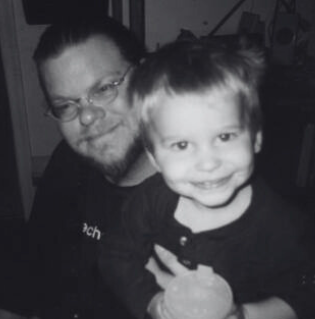
Until then here are some pics of my family.

20110725-040105.jpg

20110725-040116.jpg

20110725-040136.jpg

20110725-040147.jpg

20110725-040158.jpg

20110725-040212.jpg

20110725-040223.jpg

20110725-040232.jpg

20110725-040244.jpg

20110725-040253.jpg

20110725-040301.jpg

Love Wins and Infant Salvation – Chapter Two

As a parent who has lost a child I am very interested in how Love Wins relates to my questions about Infant Salvation and the fate of my son, Jude.

Therefore, this review of Rob Bell’s book Love Wins is rather specific and is limited to the topic of Infant Salvation.

A list of other more detailed reviews can be found at the bottom of m review of Love Wins and Infant Salvation – Preface.

Love Wins and Infant Salvation – Preface

Love Wins and Infant Salvation – Chapter 1 – What About the Flat Tire?


In chapter two Rob Bell talks about Hope, Heaven and Help, as well as flat tires.

What about hope?

While the Love Wins Preface does not speak directly to Infant Salvation, chapter one, What About the Flat Tire?, does.

For a book about heaven, hell, and the fate of every person who ever lived the context of infant salvation is rather dark and lacks comfort or hope.

Chapter two starts with the now infamous line of questioning about Gandhi’s eternal fate. These question, which were asked in the book’s trailer, helped ignite the firestorm that spread across the blogosphere.

Really?

Gandhi’s in hell?

He is?

We have confirmation of this?

Somebody knows this?

Without a doubt?

And that somebody decided to take on the responsibility of letting the rest of us know? (pages 1-2)

Along with these questions he goes on to ask dozens more.

Some silly. Some serious. All designed to generate an emotional response.

Like a caged animal, these questions quickly turn on us and attack the very heart of the Christian message; hope.

He writes:

Several years ago I heard a woman tell about the funeral of her daughter’s friend, a high-school student who was killed in a car accident. Her daughter was asked by a Christian if the young man who had died was a Christian. She said that he told people he was an atheist. This person then said to her, “So there’s no hope then.”

No hope?

Is that the Christian message?

“No hope?”

Is that what Jesus offers the world?

Is this the sacred calling of Christians – to announce that there’s no hope? (pages 3-4)

Hope is a funny thing.

I have written about it often (here, here, here, here, here, and here)  and I understand Rob Bell’s frustration.

While my frustration comes from empty or vague comments about hope, Rob Bell turns the tables like a New Jersey Housewife and implies that the traditional, historical, Orthodox Christian message is actually a message of no hope!

I think he knows better, but more on that in a moment.

What about heaven?

Immediately after assassinating hope he then goes all Emo on us and takes Infant Salvation to its (morbidly) logical conclusion.

He writes:

The death of this high-school student raises questions about what’s called the “age of accountability.” Some Christians believe that up to a certain age children aren’t held accountable for what they believe or who they believe in, so if they die during those years, they go to be with God. But then when they reach a certain age, they become accountable for their beliefs, and if they die, they go to be with God only if they have said or done or believed the “right” things. Among those who believe this, this age of accountability is generally considered to be sometime around age twelve.

This belief raises a number of issues, one of them being the risk each new life faces. If every new baby being born could grow up to not believe the right things and go to hell forever, then prematurely terminating a child’s life anytime from conception to twelve years of age would actually be the loving thing to do, guaranteeing that the child ends up in heaven, and not hell, forever.  Why run the risk? (pages 3-4)

I, too, have raised this very question.

I usually do it when a conversation turns into a confrontation.

When a conversation starts to get out of hand I bring up the same “logical” conclusion.

I know it is mean, but I don’t always bring it up and it is usually as a last resort to get someone to shut up or at least step back and acknowledge that the topic is not an easy one.

Why is it not an easy topic to discuss?

Because Infant Salvation is not directly discussed in the Bible.

It is indirectly discussed – and hinted at – but there is no one “chapter and verse” where it is defended or defined.

When people start acting like it is I usually bring up the same points that Rob Bell does in chapter one, about guaranteeing a child’s salvation.

Also, where Infant Salvation is at least indirectly addressed in the Bible, Age of Accountability is not. It is simply a logical assumption based on the indirect discussion.

And this is where Rob Bell’s writing style starts to get him in trouble.

Rob Bell likes to start with very general and high level comments, but end with specific conclusions and applications.

General (yet sometimes valid) questions will end with a specific (and usually misleading) response.

For example, “generally considered to be sometime around age twelve” (emphasis mine) is a general comment. He even uses the word “generally.” He concludes, however, with a very specific application stated as being absolution true; “Prematurely terminating a child’s life anytime from conception to twelve years of age would actually be the loving thing to do.”

With that he leaves the idea of Infant Salvation and begins to create a straw man of sorts in Age of Accountability.

He again asks questions but provides no answers.

This is disingenuous as the questions certainly have implied answers that are very negative – or contrary – to traditional orthodoxy.

He may not give answers, but the questions are worded in a way as to show the answer he wants to give, but does not.

But it’s ok that the idea of Infant Salvation and the Age of Accountability don’t make sense; neither does Jesus when He talks about salvation.

Rob Bell goes on to imply that Jesus can’t even explain how someone “gets saved.”

He quotes many verses that seem to contradict each other about how someone “gets saved.” He goes so far as to imply that Jesus doesn’t even know how to save anyone.

His concluding straw man question is “which Jesus do we believe in?” Which Jesus should we follow?

For example, Rob Bell quotes Renee Altson’s Stumbling Toward Faith:

I grew up in an abusive household. Much of my abuse was spiritual – and when I say spiritual, I don’t mean new age, esoteric, random mumblings from half-Wiccan, hippie parents… I mean that my father raped me while reciting the Lord’s Prayer. I mean that my father molested me while singing Christian hymns.

That Jesus? (page 7)

The question, as presented in the context of chapter one, is should we follow “that Jesus?”

The problem is that this quote is not even about Jesus.

It is about a horrible man.

A real !@#%@$$ of a man.

It is horrible. It is heinous. It is disgusting.

But it is not about Jesus.

The emotions are real and the implied answer is a resounding “NO! WE WILL NOT FOLLOW THAT JESUS!”

But it was her father who was a monster, not Jesus.

It was the father who committed the crime, not Jesus.

It was the father who sinned, not Jesus.

Rob Bell ends the chapter by implying we don’t know to get saved, that we don’t know what to believe, and that our current understanding of salvation and faith is obviously wrong.

It is ironic that he ends the chapter by saying, “But this isn’t just a book of questions. It’s a book of responses to these questions.” (page 19)

So far he has asked a lot of questions, but has provided almost no answers.

Maybe he will in chapter two, Here is the New There, the chapter about heaven.

What about help?

So what about the flat tire?

While dissecting our (mis)understanding of salvation he also puts evangelism on trial.

He writes:

If our salvation, our future, our destiny is dependent on others bringing the message to us, teaching us, showing us – what happens if they don’t do their part?

What if the missionary get a flat tire? (page 9)

Earlier I stated that I think he knows better. Here’s why.

It is one thing to ask questions (even misleading questions) about our understanding of salvation; it is another thing all together to question the purpose of the church and the role of the Holy Spirit in salvation.

As a pastor Rob Bell knows the work and purpose of the Church.

He knows our “great commission” (Matthew 28:16-20).

He even discusses it in the next chapter about heaven.

He also knows that the Holy Spirit – and not just missionaries with flat tires – has a role in our salvation (John 16:8-11, 2 Corinthians 1:21-22, Ephesians 1:13, Ephesians 4:30).

To imply that God has stepped away from His creation and left it all up to us is extremely arrogant. Even more arrogant than the person who thinks Gandhi, a man who publicly rejected Jesus, will be separated from God forever.

In conclusion.

I find it funny that so many people will tell you that there is nothing you can do to get saved and then say all you have to do is believe.

Or when people say there is nothing you can do to be saved so say this simple prayer.

It’s funny. Not slap you knee funny, but ha ha funny.

But in the ends it is simply our way of trying to verbalize – explain – something spiritual, mystical, and supernatural.

It’s as if Rob Bell does not understand that there are different types of speech.

We say that we saw a beautiful sun set, even though the sun did not set.

The earth turned.

The sun did not set. But it looks like it did so we call it a sun set.

Also, belief, whether religious or not, leads to action.

If I believe I should help someone then I will help them. If I believe that they need to learn a lesson and do something on their own, then I won’t help them. In this case my inaction becomes my action.

For Rob Bell to play loosey goosey with his words as he tries to explain God’s words is irresponsible. I know he wants to defend his beliefs (oh yea, and even his actions are based on his beliefs) so I think he should defend them.

If you want me to agree to flush 2000 years of tradition and Orthodoxy down the toilet, at least show me why I should.

So far he has not.

As a parent who has lost a child and has (sometimes) struggled with Infant Salvation I have yet to find hope, or even comfort, in Love Wins.

Maybe I will find it in chapter three, Here is the New There, the chapter about heaven.

Please subscribe to be notified when the next post is available.

Until next time.

Love Wins and Infant Salvation – Preface

Love Wins and Infant Salvation

I like Rob Bell. I really do.

I bought, read and enjoyed Velvet Elvis.

I bought, read and mostly enjoyed Sex God.

I got Drops Like Stars from the library, read most of it, but got tired if it quickly.

I skipped Jesus Wants to Save Christians. The name bugged me and I was not willing to stop reading what ever it was I was already reading.

I recently got Love Wins from the library and am reading it now.

There is no doubt the controversy is justified. There is also no doubt that the book is designed to create controversy and to get people talking.

And boy are people talking.

People far smarter than me (and some of them a bit ruder than me) have reviewed Love Wins. Some have been helpful, some have not. There are links at the bottom of this post if you are interested reading what others have said about Love Wins.

My review, however, will be rather specific. My review will be limited to Love Wins and Infant Salvation.

I plan to post one review per chapter, starting with the preface.


Love Wins and Infant Salvation, Preface

While the Preface to Love Wins starts with a bang in the context of hell (Who knew what you were taught was all wrong and way too mean?) and salvation (Who knew that none of us really knows how to be “saved” or even what “saved” really means?), there is no specific mention or illusion to Infant Salvation.

I would suggest, however, that the Preface does address the emotions and frustration I have felt while wrestling with a biblical understanding of Infant Salvation.

Rob Bell writes:

I’ve written this book because the kind of faith Jesus invites us into doesn’t skirt the big questions about topics like God and Jesus and salvation and judgment and heaven and hell, but takes us deep into the heart of them. (page ix)

Some communities don’t permit open, honest inquiry about the things that matter most. Lots of people have voiced a concern, expressed a doubt, or raised a question, only to be told by their family, church, friends, or tribe: We don’t discuss those things here. (page ix)

My hope is that this frees you. There is no question that Jesus cannot handle, no discussion too volatile, no issue too dangerous. (page x)

I wholeheartedly agree.

God is not afraid of your emotions.

He is not afraid of your questions.

He can even handle your anger and your doubt.

As I have written before (here and here) I have faced this very attitude; the attitude that Infant Salvation is not to be questioned, doubted or talked about.

I have tried to talk about my concerns, my doubts, my frustration and most of the times they are met with cliché responses or disapproval. Most of the time people (especially pastors) simply say, “Of course your son is in heaven!”

If only the answers to my questions were that simple.

As the controversy surrounding Love Wins shows, the idea that someone can “go to heaven” without knowing God is a hard pill to swallow.

What is Rob Bell saying that I am not saying?

I do believe in Infant Salvation. I believe my son is with God even now, even though he never believed.

Maybe I should go easy on Rob Bell and Love Wins.

It is my desire that this can be a place where you can grieve, question, vent, and grow. Instead of running from Him, run to Him – draw near to Him. He can take it.

Love Wins and Infant Salvation

While I do agree with what Rob Bells says about asking questions and addressing doubts, I do not agree with the way he argues.

For example, in trying to show that his view is not really new (or wrong) he writes:

And then, last of all, please understand that nothing in this book hasn’t been taught, suggested, or celebrated by many before me. I haven’t come up with a radical new teaching that’s any kid of departure from what’s been said an untold number of times. That’s the beauty of the historic, orthodox Christian faith. It’s a deep, wide, diverse stream that’s been flowing for thousands of years, carrying a staggering variety of voices, perspectives, and experiences. (pages x-xi)

First, slavery and mass genocide (think Holocaust, Rwanda, etc.) have been taught, suggested and even celebrated. That doesn’t make them right or good.

The converse to his main point has also been taught, suggested and celebrated.

Both cannot be right.

Anyway, this starting argument style is sloppy logic at best, and at worst misleading.

Second, while it has been discussed in “orthodox” Christianity, he leaves out that it has also been rejected again, and again, and again as being contrary to what the Bible teaches.


A dark understanding of Infant Salvation is brought up in Chapter 1, What About the Flat Tire?, and will be the topic of our next post.

Please subscribe to be notified when the next post is available.


Until next time, here are a few other reviews, comments, complaints about Love Wins:

http://blog.beliefnet.com/omeoflittlefaith/2011/02/thoughts-rob-bell.html

http://www.relevantmagazine.com/culture/books/reviews/25070-love-wins-by-rob-bell

http://thegospelcoalition.org/blogs/kevindeyoung/2011/03/14/rob-bell-love-wins-review/

http://thegospelcoalition.org/blogs/justintaylor/2011/02/26/rob-bell-universalist/

http://www.challies.com/book-reviews/love-wins-a-review-of-rob-bells-new-book

http://www.albertmohler.com/2011/03/16/we-have-seen-all-this-before-rob-bell-and-the-reemergence-of-liberal-theology/

http://www.edstetzer.com/2011/03/rob-bell-love-wins-review-ish.html

http://www.christianitytoday.com/ct/2011/april/lovewins.html

http://www.redletterchristians.org/love-wins-rob-bell-and-the-new-calvinists/

http://www.patheos.com/community/bibleandculture/2011/03/02/rob-bells-new-book-love-wins/

Infant Salvation Book Search (Google Labs)

Google Labs Book Search - Infant Salvation

I plan to post a few more comments on Love Wins and Infant Salvation shortly. (Subscribe to be notified when there are new posts.)

Until then here is a graph of the usage of Infant Salvation in literature from 1800 – 2010 (courtesy of Google Labs).

Observations

There is a consistently growing body of work between 1800 and 1880.

While there is a slight decline from 1880 to 1900, there is a sudden decline around 1900, especially around the time of the Industrial Revolution.

There are two interesting spikes post Industrial Revolution. One during the 1960s and one around Y2K.

Questions

Why the sudden drop in the 1900?

And why the (slight) increase of interest in the 1960s and 2000?

Thoughts?

I Miss My Son


February 11, 1999 – April 12, 2001

JUDE LEONARD SMITH came into this world on February 11, 1999 while listening to Vivaldi’s Four Seasons.

His life was a symphony of laughter and joy every day thereafter and he was the composer of some of our finest memories.

He was listening again to Vivaldi as he went to be with our Lord at 2:20 pm Thursday, April 12, 2001.

He will be sorely missed by all who had the privilege to know him, but most especially by his best friends, his family:

parents Simon and Ericka (both of whom he affectionately called “Mommy”),

older brother Job (“DOE!”),

only sister Abigail (“Thithy”),

and younger brother Jesse (“Thethie”).

We miss you, Judey-patooty! And we love you, precious boy!

Love Wins and Infant Salvation

So, Rob Bell has a new book coming out – Love Wins.

https://www.robbell.Com/lovewins/

http://www.vimeo.Com/20272585

Rob’s work tends to be polarizing. If you love him you really love him. If you don’t, then you probably hate him.

Very black and white with little, if any, shades of gray.

Love Wins looks to be no exception. How could it with a sub-title like this?

“A Book About Heaven, Hell, and the Fate of Every Person Who Ever Lived.”

The (Christian?) Blogosphere has exploded in a he-said, no-he-didn’t-say, maybe-he-said, what-will-he-say mess.

And the book isn’t even out yet. Continue Reading…

Happy Birthday Jude

Parenthood and the Hope of Heaven

I know that there is a lot I am not supposed to like about Parenthood. (The TV show on NBC, not my relationship with my kids.)

  • Teen/pre marital sex.
  • Adultery.
  • Drinking.
  • Drugs.
  • And little – if any – respect for God and/or religion.

Even so, I love this show. It is one of my favorite TV shows right now.

Why?

Because at its core it has a profound respect for family, fathers, mothers, grandparents, and community.

Until last night most references to religion have been negative and limited to Eastern religious ideas.

But all that changed last night.

Last night Parenthood dealt with death, the afterlife, and hope.

From www.nbc.com/parenthood/:

Joel and Julia sit Sydney down after school to tell her that Amelia, the bird, died. Joel explains that death is what makes the world a beautiful place, because it’s not permanent. When Sydney starts to get sad, Julia tells Sydney that after you die you go to heaven where everyone that you love is waiting for you. Listening to Julia tell Sydney that her grandma, Joel’s mom, who died when she was just a baby, is waiting for them in heaven and with Amelia makes Joel tear up.

When Julia gets home from her girls’ night in with Sarah, she finds Joel in the kitchen, watching Sydney play. Joel admits that he likes thinking about his mom in heaven with that bird.

What this recap does not state is that Joel does not believe in heaven and does not want to teach his daughter Sydney to believe in heaven.

Even so, to spare her daughter of the pain of death – the loss that death brings – Julia uses heaven as the catalyst for hope.

While I may not agree with the shows view of salvation and the afterlife, I do appreciate that Parenthood understand that there is, in some way, hope in the idea of heaven.

More hope coming soon.

As you obviously already know, I don’t own any copy rights to Parenthood. NBC does (I got the pics from www.nbc.com/parenthood/) and I am hoping they view this as free advertisement and don’t sue me.

You can watch some of this season’s Parenthood on www.hulu.com.

If you are interested in past seasons you can:

Saint Depraved Poetry – Thorn

Although it may be cliché, I would suggest that my poetry got “better” as I wrote more honest poetry. After Jude died my poetry is a bit less concealing and certainly more revealing.
Thorn is my wrestling with how my sin may or may not be intertwined with the events surrounding his death.


thorn
is this the thorn in my flesh
is this the thorn in my side
is this the thorn that will hold me back
is this the thorn in my pride
is this the thorn in my side
is this the thorn in my flesh
is this the thorn that will break my back
is this the thorn wound still fresh
is this the thorn in my skin
is this the thorn in my hide
is this the thorn that will hold me down
is this the thorn in my stride
is this the thorn in my hide
is this the thorn in my skin
is this the thorn that will break me down
is this the thorn of my sin


FYI #1 – the lack of punctuation was not meant to be lazy. It was intended to add to the numbness of the feelings.

FYI #2 – I don’t know why/when it happened, but I like duality of thoughts and rhyme in structuring the poem around two complete ideas (flesh/side, then side/flesh, skin/hide, then hide/skin)
Page 1 of 712345»...Last »